pIPING COMPONENTS
what are piping components ?
Piping components are engineered steel products used for the construction, connection, control, and maintenance of industrial piping systems that transport fluids, gases, steam, chemicals, and process media across various industries. These components are essential in sectors such as oil & gas, petrochemicals, power plants, marine, water treatment, refineries, food processing, pharmaceuticals, and heavy engineering.
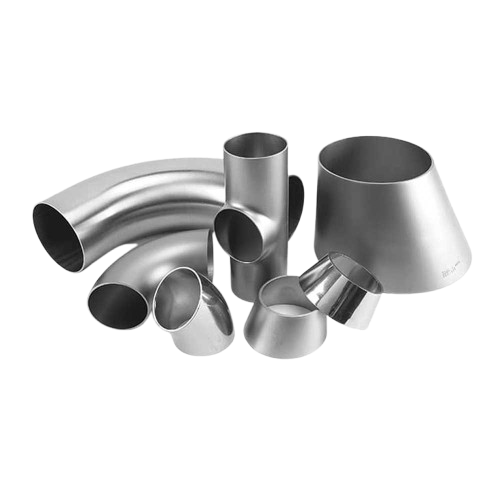
Steel piping components include a wide range of products such as pipes, tubes, buttweld fittings, forged fittings, elbows, tees, reducers, caps, bends, outlets, flanges, valves, gaskets, fasteners, pipe spools, manifolds, strainers, expansion joints, couplings, unions, nipples, branch connections, clamps, supports, and custom fabricated assemblies. Manufactured in materials like carbon steel, stainless steel, duplex steel, alloy steel, and nickel alloys, these components are designed to withstand high pressure, temperature, corrosion, and demanding operating conditions.
Precision manufacturing, dimensional accuracy, and compliance with international standards such as ASME, ASTM, ANSI, API, and DIN ensure reliable performance, leak-proof connections, and long service life in critical piping applications.
different types of piping components
CDifferent types of piping components are used together to build complete industrial piping systems for fluid handling, pressure control, flow regulation, and process distribution. Each component serves a specific function within the pipeline network and is manufactured according to industry standards for strength, durability, and operational safety.
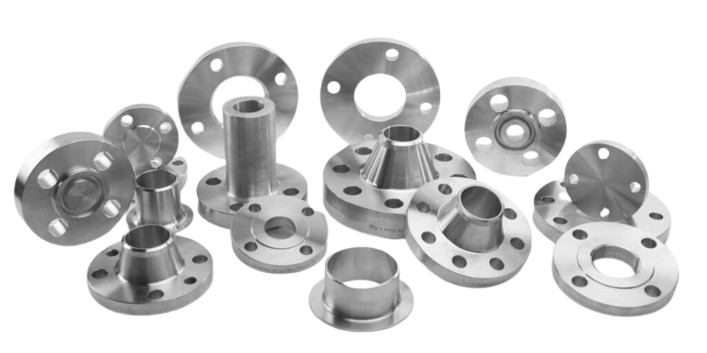
Common types of steel piping components include pipes and tubes for fluid transportation; buttweld fittings such as elbows, tees, reducers, caps, and stub ends for changing direction or pipe size; forged fittings including socket weld and threaded fittings; and flanges used for detachable pipe connections. Valves such as gate valves, globe valves, ball valves, butterfly valves, check valves, and plug valves are used to regulate and isolate flow.
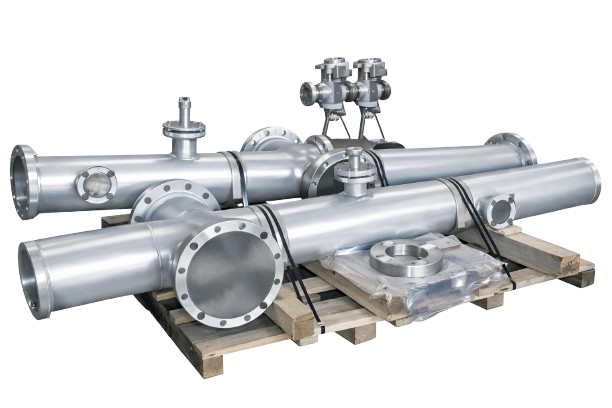
Additional piping components include pipe spools, manifolds, strainers, expansion joints, couplings, unions, nipples, branch outlets, gaskets, fasteners, clamps, hangers, pipe supports, ferrules, adaptors, and custom fabricated assemblies. These components are manufactured in carbon steel, stainless steel, alloy steel, duplex steel, and nickel alloys for use in industries such as oil & gas, petrochemical, power generation, marine, chemical processing, and water treatment.
materialS
stainless steel
mild & high carbon steel
copper & alloys
nickel & alloys
special alloys
alloy steel
industries they are used in
The precision piping components manufactured by Contorc Industries are widely used across diverse industrial sectors that require high-performance engineering parts and close-tolerance manufacturing solutions. Our components serve critical applications in industries such as oil & gas, petrochemical, chemical processing, power generation, marine, shipbuilding, aerospace, automotive, railways, defence, mining, cement plants, steel plants, paper mills, food processing, pharmaceuticals, water treatment, automation, construction equipment, heavy engineering, and industrial machinery manufacturing. Designed to withstand demanding operating conditions including high pressure, extreme temperatures, corrosion, abrasion, and continuous mechanical stress, our machined components are trusted for both standard industrial systems and specialized engineering applications worldwide.
MANUFACTURING PROCESS
he manufacturing process of piping components involves multiple precision engineering operations to produce durable and high-performance products for industrial piping systems. Depending on the type of component, manufacturing may include forming, forging, casting, machining, fabrication, heat treatment, and surface finishing processes to achieve the required mechanical strength, dimensional accuracy, and corrosion resistance.
Pipes and tubes are generally produced through seamless or welded manufacturing methods, while buttweld fittings such as elbows, reducers, and tees are manufactured using hot forming, cold forming, hydraulic pressing, or induction bending techniques. Forged fittings and flanges are produced through closed-die or open-die forging followed by CNC machining for accurate dimensions and sealing surfaces. Valves and strainers involve casting, machining, assembly, and pressure testing processes to ensure reliable flow control performance.
Fabricated piping components such as pipe spools, manifolds, and custom assemblies are manufactured through cutting, welding, beveling, drilling, and dimensional inspection operations. Final processes often include heat treatment, pickling, passivation, galvanizing, anodizing, coating, hydrostatic testing, non-destructive testing (NDT), and quality inspection in compliance with standards such as ASME, ASTM, API, ANSI, and DIN.
CITIES that we deliver to
Contorc Industries supplies piping components, stamped components, machined components, and engineered metal products to customers across major industrial and manufacturing hubs worldwide. Our global delivery network supports industries in leading cities including Hyderabad, Coimbatore, Vadodara, Rajkot, Ludhiana, Noida, Jakarta, Bangkok, Kuala Lumpur, Shanghai, Guangzhou, Seoul, Nagoya, Adelaide, Melbourne, Calgary, Montreal, Querétaro, Buenos Aires, Dubai, Riyadh, Dammam, Rotterdam, Hamburg, Turin, Prague, and Copenhagen.
With a strong focus on precision manufacturing, consistent quality, timely delivery, and customized engineering solutions, Contorc Industries serves diverse industries including automotive, oil & gas, petrochemical, power generation, marine, aerospace, construction, heavy engineering, and industrial manufacturing across international markets.